The short answer
To check your engine oil, park on level ground, switch off the engine and let it settle. Pull the dipstick, wipe it clean, push it fully back in, then pull it out and read the level. The oil should sit between the MIN and MAX marks. If it is at or below MIN, top up in small amounts with the oil grade listed in your owner’s manual, checking the level again after each addition.
What you need before you start
- Your owner’s manual, for the correct oil grade, the dipstick location and any special procedure.
- A clean, lint-free cloth or strong paper towel.
- Disposable gloves and a torch if the engine bay is dark.
- A funnel if the oil filler neck is deep or awkward to reach.
- The correct engine oil for topping up, kept clean and closed.
- A level place to park, away from traffic.
Before you open the bonnet
The car must be on flat, level ground. A sloping driveway, a cambered road or a raised kerb can make the oil sit to one side of the sump, so the dipstick gives a false reading. Apply the handbrake, switch off the ignition and keep the key away from the engine bay. Let the engine settle so the oil drains back down; a few minutes is usually enough, but follow the handbook if it gives a specific wait. Open the bonnet only when the catch and nearby parts are cool enough to touch.
How to check the oil, step by step
-
01 /
Park level and switch off
Stop on flat ground, apply the handbrake and switch off the engine. Wait for it to settle and for hot parts to cool before you reach into the engine bay.
-
02 /
Find the dipstick
Use the handbook if you cannot spot it. The handle is often coloured, but not always. Do not mistake the oil filler cap for the dipstick, and do not pull any other dipstick unless you know what it is.
-
03 /
Pull it out and wipe it clean
Withdraw the dipstick slowly, note where the MIN and MAX marks are, then wipe the whole blade with a clean cloth. This gives you a clear reading rather than a smear of old oil.
-
04 /
Push it fully home and pull again
Slide the dipstick all the way back into its tube, pause for a moment, then pull it out smoothly. Hold the blade roughly horizontal so the oil does not run along it.
-
05 /
Read the level
Look at both sides of the blade in good light. The oil should be between MIN and MAX; halfway is a healthy place to be. Below MIN, top up. Above MAX, do not run the engine; have it checked or drained.
-
06 /
Refit everything and close the bonnet
Push the dipstick fully home and check that the oil filler cap is tight. Close the bonnet securely and look under the car later for fresh drips.
How to read the dipstick markings
Dipsticks use different markings: the words MIN and MAX, a pair of holes, notches, or a crosshatched area. The principle is the same. The lower mark is the minimum safe level and the upper mark is the maximum. A level in the middle is normal. Do not treat the space between the marks as a precise measure of one bottle of oil; engines differ, and the handbook may give the capacity between the marks or the total fill. If one side of the blade reads differently from the other, wipe it, reinsert it fully and try again. A smeared or angled blade is the usual reason for a confusing reading.
Topping up without overfilling
-
01 /
Confirm the oil grade
Check the owner’s manual or the oil filler cap for the correct grade and specification. Engine oils are not interchangeable just because they look the same; the wrong grade can affect protection and emissions equipment.
-
02 /
Clean around the filler
Wipe around the oil filler cap and neck before removing the cap. Grit, dust or old oil around the opening can fall into the engine.
-
03 /
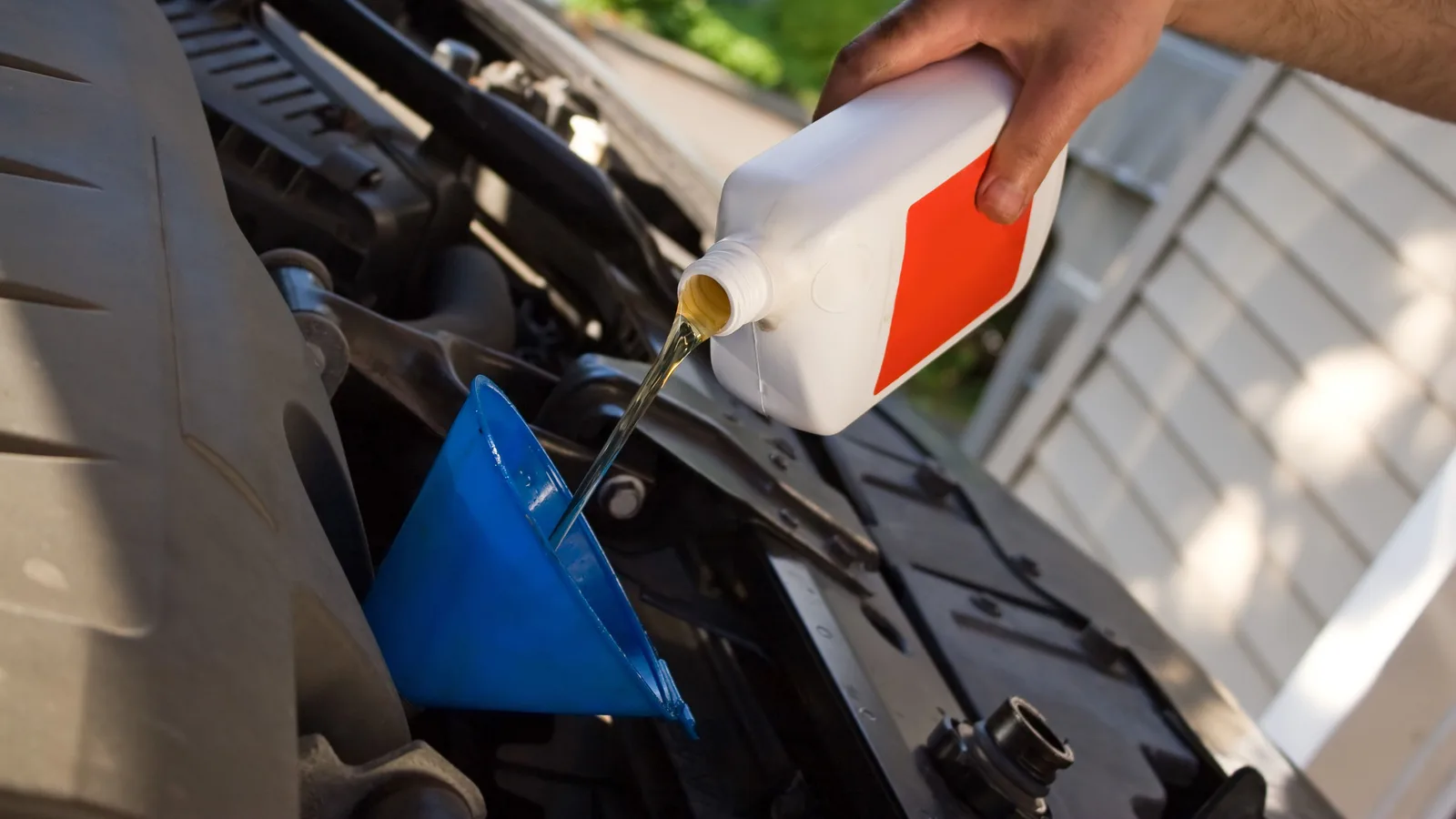
Add a small amount at a time
Use a funnel and add a little oil, then wait a minute for it to drain down. Recheck the dipstick before adding more. It is much easier to add oil than to remove it.
-
04 /
Run the engine and recheck
Refit the filler cap and dipstick, start the engine and let it idle briefly, then switch off. Wait for the oil to settle, recheck the level and top up again only if it is still below MAX.
-
05 /
Deal with the waste safely
Engine oil is hazardous. Keep used oil and oily rags away from children and pets, and take them to a local household waste recycling centre. Never pour oil down a drain or into the ground.
Common mistakes and how to fix them
| Mistake | Why it happens | What to do |
|---|---|---|
| Reading straight after switching off | The oil has not had time to drain back to the sump | Wait as the handbook advises; if it gives no time, give the engine a few minutes to settle. |
| Checking on a slope or kerb | The oil sits to one side, so the dipstick reads high or low | Move the car to level ground and repeat the whole check. |
| Not wiping the dipstick | Old oil smears the blade and hides the true level | Wipe it clean, push it fully home, then pull it out and read again. |
| Pouring in a whole bottle | It is easy to overshoot MAX | Add a small amount, wait, recheck, and repeat only if needed. |
| Using the wrong oil | The grade or specification does not match the engine | Check the handbook or filler cap; if the wrong oil has gone in, ask a garage whether it needs changing. |
When to stop and get help
- The red oil pressure warning light comes on while driving. Stop safely, switch off the engine and check the level only when it is safe to do so. Do not drive on and hope a top-up fixes it.
- The oil looks milky, creamy or foamy. This can suggest coolant mixing with the oil; stop driving and have it inspected.
- The oil contains metal particles or has a strong petrol smell. Both need diagnosis rather than another top-up.
- The level keeps falling. A leak or high oil consumption needs finding; topping up every week is not a repair.
- You have overfilled the engine and the level is well above MAX. Do not run it; arrange for the excess to be drained.
Cars with electronic oil level checks
Some modern cars have no dipstick. Instead, the oil level appears in a dashboard menu, often with a bar or a message. The procedure varies: some require the engine running and warm, some want the ignition on without the engine, and some need the car to sit for a set time. Follow the handbook prompts exactly and keep the car level. An electronic reading is convenient, but it is not a substitute for acting on a warning. If the display says the level is low, add the specified oil in small amounts and let the system update before checking again.
How often should you check?
A weekly check is a sensible habit, especially on an older or high-mileage car, and it is worth doing before a long journey or a spell of cold weather. Newer cars may tolerate longer gaps, but regular checks catch a slow leak or rising oil consumption before it becomes expensive. Topping up is not a substitute for an oil and filter change; follow the service schedule in the handbook or the car’s service indicator. Keep a note of how much oil you add between services so you can tell a garage if the figure starts to climb.
Frequently asked questions
Can I check the oil when the engine is cold?
Yes, on most cars. A cold check is often easier and safer, but some handbooks specify a warm engine after a set wait. Follow the manual and use the same method each time so you can compare readings.
What does milky or creamy oil mean?
It can mean coolant is mixing with the oil, often through a failed head gasket or oil cooler. Stop driving and have the car inspected; do not simply top up and carry on.
Is black oil a sign that the oil needs changing?
Not by itself. Oil darkens as it holds soot and deposits, and some engines blacken new oil quickly. Use the manufacturer’s service interval and any condition-based warning rather than colour alone.
Should I top up if the level is exactly on MIN?
Yes. MIN is the lower safe limit, not a target. Add a small amount of the specified oil, recheck, and bring the level towards the middle of the range.
Does the dashboard oil light tell me the oil level?
No. The oil pressure warning light is not a level gauge. It normally comes on when pressure is already low, so check the dipstick or electronic level regularly and stop the engine if the light stays on.